The Anoma Roadmap
Introducing the Anoma Roadmap, a vertically-integrated roadmap covering the Anoma protocol, consumer apps, and developer tools.

Anoma is the Distributed Operating System (DOS) that abstracts the complexities of existing blockchains away, providing one unified interface for users to interact with and for developers to build on. The Anoma DOS turns what today feels like using 5,000 different blockchains into a single world computer.
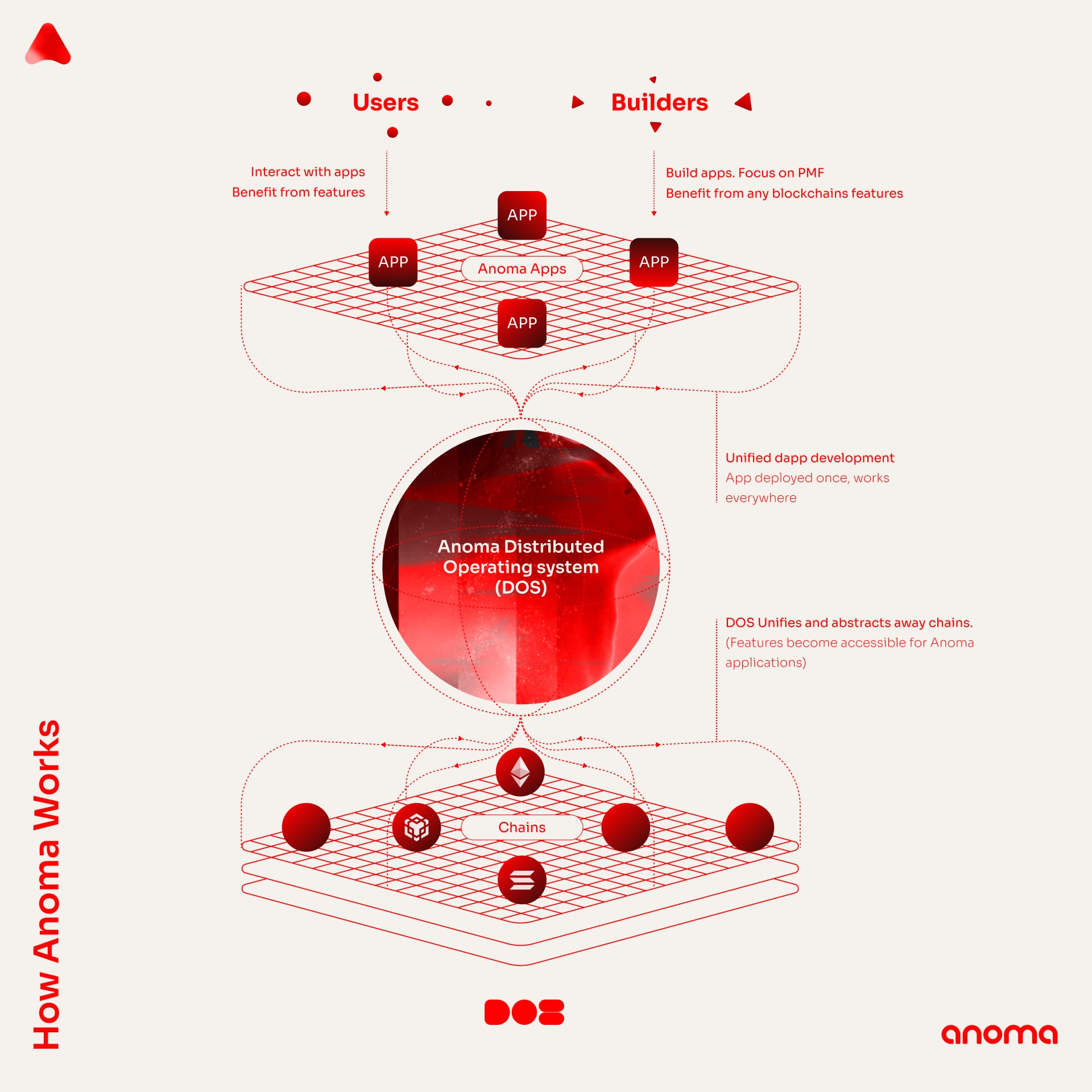
Anoma is live. In the last 6 months, we’ve deployed the Anoma DOS on Ethereum, L2s including Arbitrum, Base, and Optimism, as well as other EVM-based chains like BNB Chain and Monad. There are +20 additional deployments in progress, including to non-EVM chains, such as Solana. Any chain with Anoma installed on can be turned into resources, features accessible to any application built on Anoma.
Anoma is not an L1, not an L2, and not even a bridge. The Anoma DOS introduces a new architecture into the blockchain space, where applications can pick and choose what properties they want to use from a specific chain; and underlying chains can benefit from novel features, such as native intents, privacy, bridge-less interoperability, and scale-free consensus – without having to make any changes.
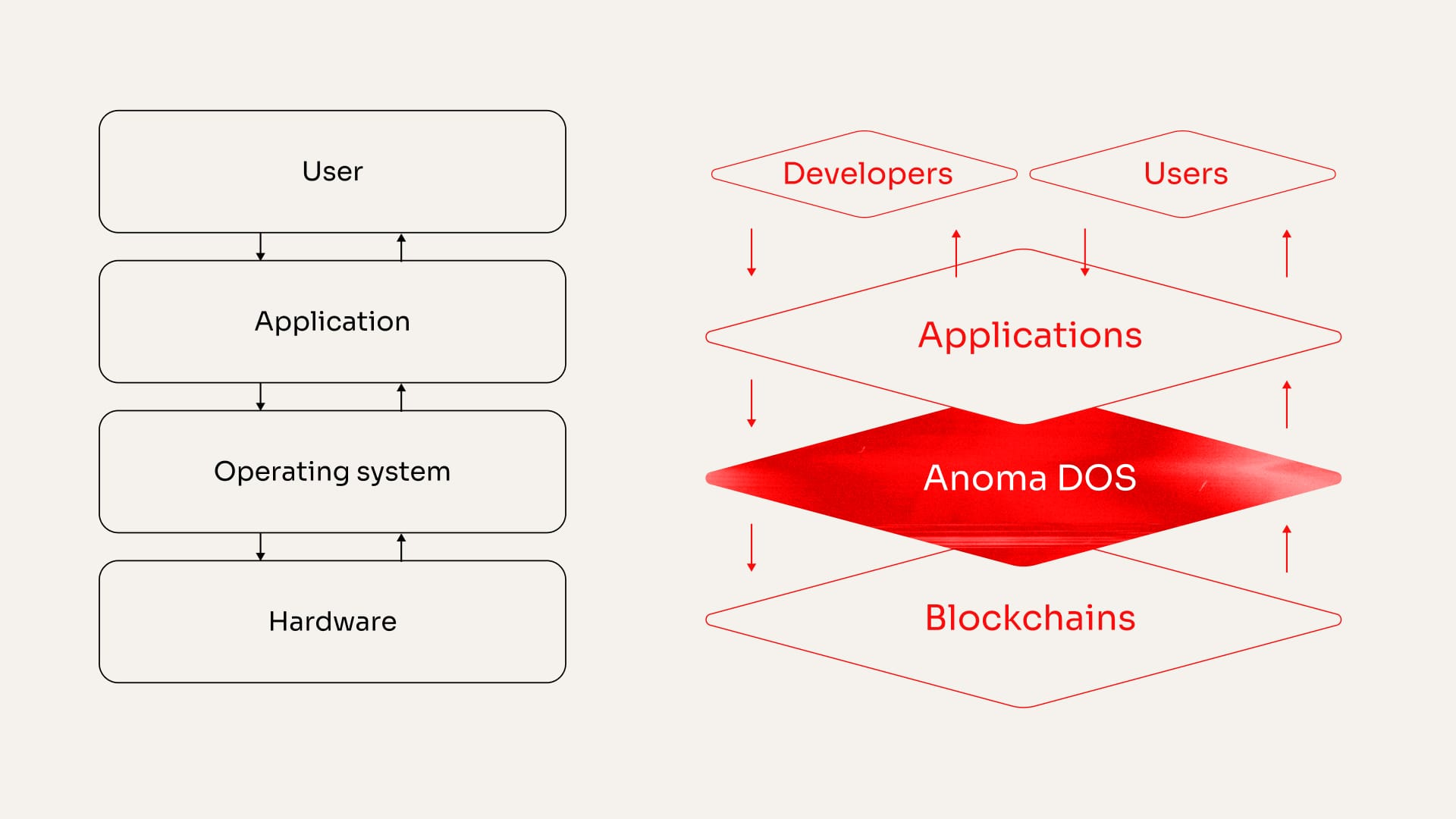
This post provides an overview of the Anoma Roadmap, a vertically integrated roadmap that includes the milestones from the protocol, throughout the infrastructure and developer tools, to consumer-facing products – all necessary to make Anoma’s vision a reality.
Protocol

The Anoma DOS is built on the Anoma protocol. The Anoma protocol version in production is Galileo and there are many protocol upgrades in development, such as Dagon and Ahra.
Anoma Galileo

Anoma Galileo is the Anoma protocol version currently in production – deploying the Anoma DOS to existing blockchains.
With Galileo:
- The Anoma DOS can be deployed to existing blockchains
- Introduces the Anoma Resource Machine (ARM) and the novel resource model
- With the ARM, the Anoma DOS enables a programmable privacy overlay to any chain where it is installed
- Developers can write applications using the affordances of the ARM: privacy-preserving state transitions and native intents
- Developers can write applications once and run them on any chain with Anoma installed
- Applications can select different providers for different services which they require: e.g. security or ordering from Ethereum, throughput from Solana, solving from a specific validator, etc.
Anoma Dagon

Anoma Dagon, the next protocol version of Anoma, introduces groundbreaking advances in distributed systems and state space – networking all the individual deployments into one unified distributed system and state space.
Anoma Dagon:
- Introduces controllers, a unique mechanism in Anoma’s distributed systems’ layer, which enables any individual, machine, or network to be the ultimate controller of state.
- Native interoperability, the connection between all blockchains with the DOS installed – forming the Anoma Network
- Developers can run their Anoma applications on the high-speed native Anoma controller
- Applications can leverage Anoma’s native interoperability system for multi-chain interactions
- Users can create intents which can reference state from multiple domains (e.g. swapping for either Ethereum-ETH or Base-ETH)
Anoma Ahra

Anoma Ahra is the third protocol version of Anoma, which builds on top of Anoma Dagon’s advances in distributed systems – deploying the scale-free world computer.
Anoma Ahra:
- Enables scale-free consensus, the consensus mechanism on Anoma that enables decentralization, scale, local sovereignty with global interoperability. Scale-free consensus groups many groundbreaking consensus algorithms and protocols, such as Heterogeneous Narwhal & Paxos, Heterogeneous Broadcast, Heterogeneous Trust
- Any networked device (personal computer, phone, raspberry pi, etc.) can become part of the distributed OS and choose to provide ordering, storage, networking, or solving services – anyone in the planet can participate
- Users can launch local consensus instances on-demand (e.g. run their local payments system, to play a game of digital poker, etc.)
- Institutions can launch their own instances, tailored to their security, governance, and scaling and privacy needs, while remaining interoperable with the rest of the world
Infrastructure & Dev Tooling
Anoma’s architecture provides the ideal foundation for B2B products, i.e. infrastructure that can serve blockchains and their ecosystems, enterprise use-cases, and application builders.
Key B2B products built on top of Anoma include the Anoma DOS and the Anoma App SDK:
- Anoma Protocol Adapter (PA): The programs that install the Anoma DOS on an existing blockchain. They’re smart contracts deployable on VMs including EVM-based and SVM-based blockchains which can verify Anoma Resource Machine proofs. As a result, any blockchain with a live Anoma PA can access the benefits and features of the Anoma DOS without having to make any changes.
- The Anoma PA is currently live on many EVM-based chains and there are +20 deployllllments in progress including on SVM-based chains.
- The Anoma Explorer: A visualization of all the ongoing activity on the Anoma network.
- Anoma App SDK: The main application development SDK for builders on Anoma, where developers only have to worry about frontend and product development. The applications need to be built once and will work automatically on every chain with the Anoma DOS installed.
- For example, AnomaPay, the flagship Anoma application, is built using the Anoma App SDK.
Applications
To demonstrate the architecture, we have built consumer-facing products on the Anoma DOS, which make it possible for anyone, including non-crypto native users, to interact with Anoma.
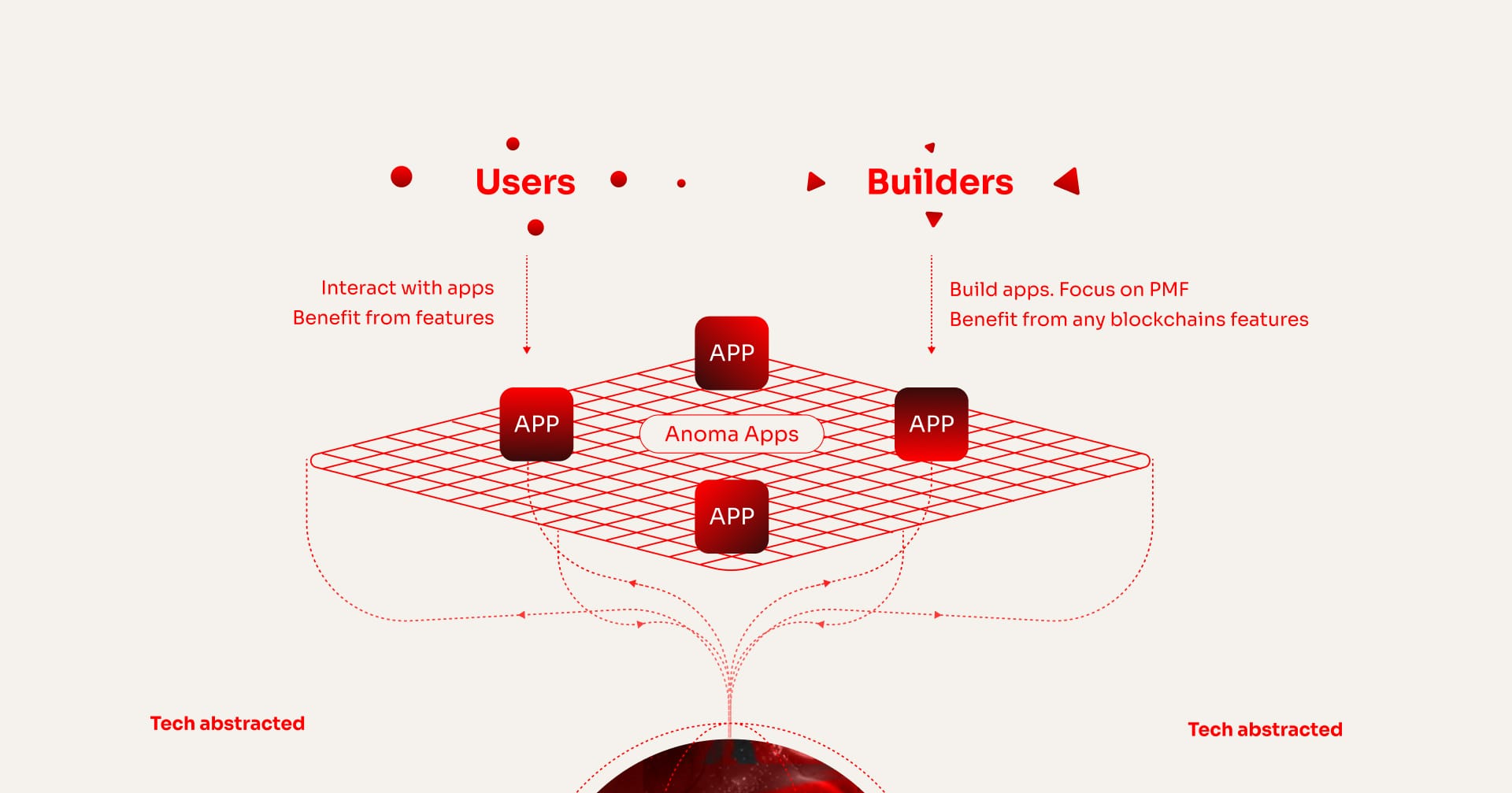
The flagship products on Anoma are built under the vision of making Swiss banking accessible for billions. These products are:
- In the payments vertical, AnomaPay: Zcash-level privacy for anyone, using any assets, on any network. Hyper friendly UX, accessible to non-crypto native users. Facilitating all kinds of payments including B2B, B2C, and C2C.
- In trading, AnomaSwaps: A multivariate, multivariable trading application leveraging Anoma’s native intents and DOS architecture. Trade anything on any network.
- In asset management, AnomaVaults: self-custodial on-chain wealthfront, with user-defined and programmable vaults on-chain.
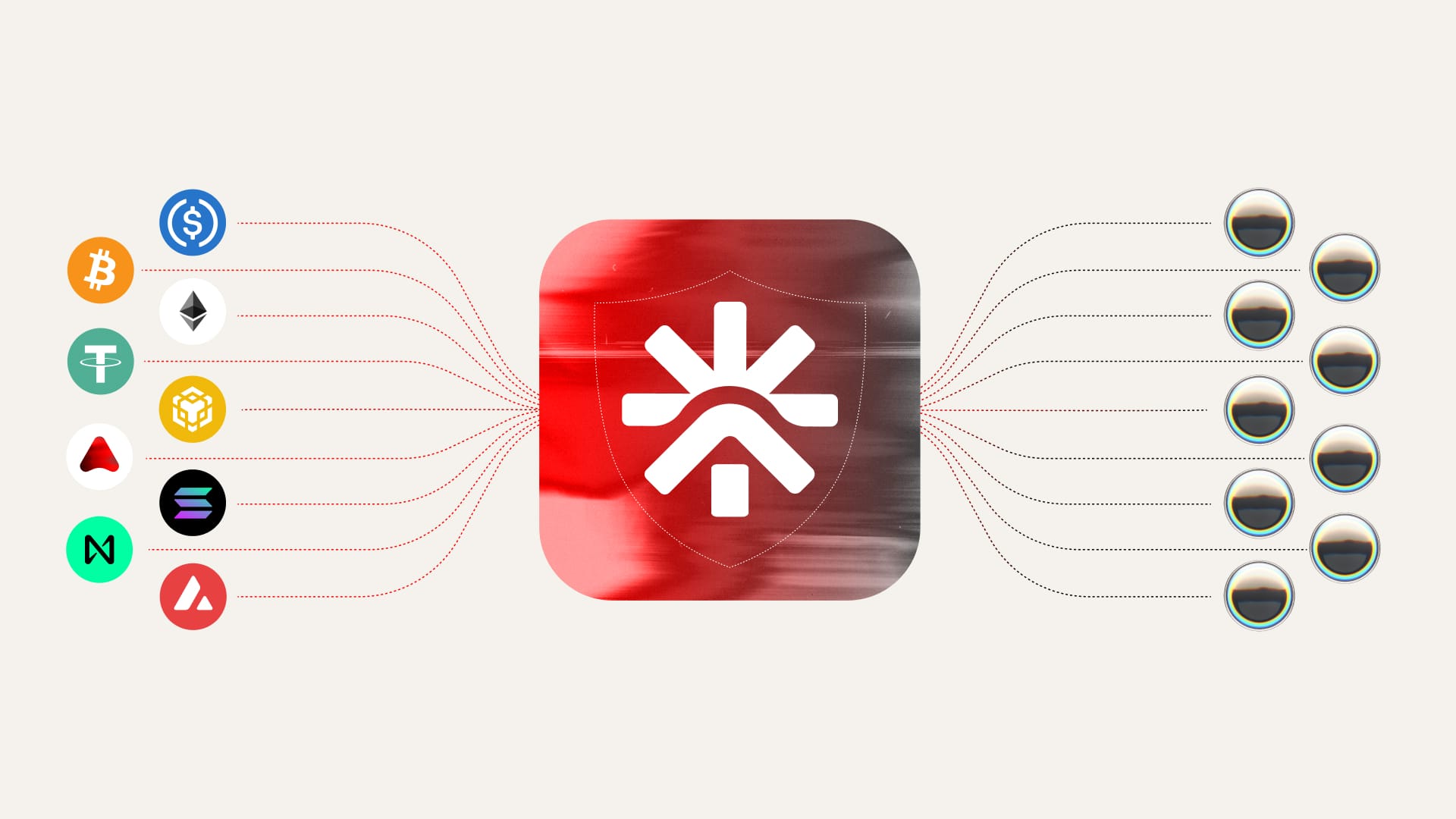
The applications above can also serve as boilerplates and reference products for enterprises or developers who want to build their own products.
And there is no limit to the diversity of applications that can be built on Anoma, many products have been discussed in the Anoma Forum.
Resources
This post provides an overview of Anoma’s roadmap, a vertically integrated roadmap that includes the milestones from the protocol, throughout the infrastructure and developer tools, to consumer-facing products – all necessary to make Anoma’s vision a reality.
- To stay up-to-date with all product and roadmap updates, follow @anoma on X
- To dive deeper into Anoma’s R&D, read the Anoma papers on the ART Platform or browse the Forum
- For a developer-oriented introduction and building resources, visit the Anoma DOCS
- For beginners, visit the Anoma website for a high-level introduction
- For any questions or feedback, join the community on the Anoma Discord